A Leader? Please!
Be careful what you wish for

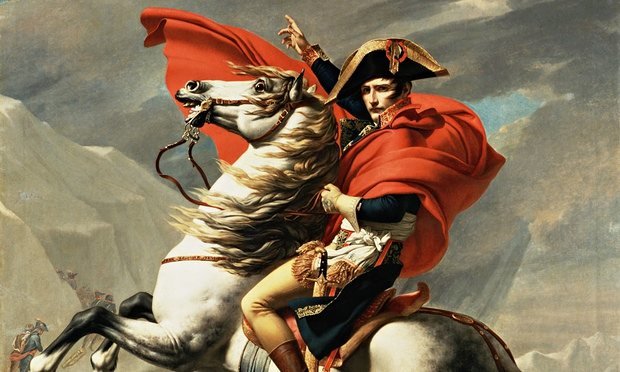
High on his horse he stands in front of his soldiers. Leading the way for his army to conquer the world and bring France to glory. His people cheering for him in the streets of Paris, praising him for his heroic accomplishments.
Yes, Napoleon was a great leader. The kind we would want to have more of. The kind that knows what to do in the face of adversity. The kind who made his people live better lives. But was he? Did he?
He brought liberal reforms, his Napoleonic code is the foundation of today's legal codes in many countries, he introduced standardized metrics, and much more. Historians describe him as having a remarkable personality, being able to convince the people around him. His reign certainly was remarkable.
But there's another side of Napoleon. Although driven by a vision and a noble dream, he ruled autocratic and oppressed opposition, and reigned undisputed. He conquered Europe in endless wars. Leaving millions dead. He led his army into one of the worst disasters in military history in his attempt to invade Russia. When he was ousted and sent to Saint Helena, France was bankrupt.
The romantic images that are in many people's minds when thinking of the apparently great leaders, usually only show one side of the story. The historical conscious of society tends to paint things in black and white, good and bad, success and failure.
Napoleon made many mistakes. But the greatest one of them all was that he did not become a good leader. And because he wasn't a good leader, he could not solve the complex problems of his time and build a sustainable legacy. A good leader understands that no single person can solve all the problems, not for a company, not for a country, not for the world. That was true in 1815, and if we accept that the world has grown ever more complex, it is certainly at least as true in 2016.
And still, not only in the early 19th century, but all over history until today, people are looking for that one strong personality to guide them. That is especially valid in times of uncertainty, ambiguity, and change.
But to lead and succeed, a different skillset is required. A leader needs to solicit opinions to make the right decisions, gather a team to solve problems. A leader should be aware of his deficiencies and find other people to fill the gap. And a leader must understand when his goal is accomplished and it's time to step down and follow others.
Unfortunately, this is not the image many of us have in mind when thinking of the greatest leaders in history. And it is not the image that lends itself to marketing and the creation of a large followership. But when we think of the leaders we want, we should be aware of our biases in perception and reflect on the skills that are really required to lead.
_____________________________________________
Please share any comments and feedback you may have (comment function, twitter, e-mail, etc.). In my short write-ups I address topics that I am particularly interested in because they align with my goals and values. As such, they are always a reflection of my ideas, thoughts, and opinions. The only thing I am positive in that regard is that I do not have all the perspectives, all the knowledge, or all the facts - help me be better tomorrow.
